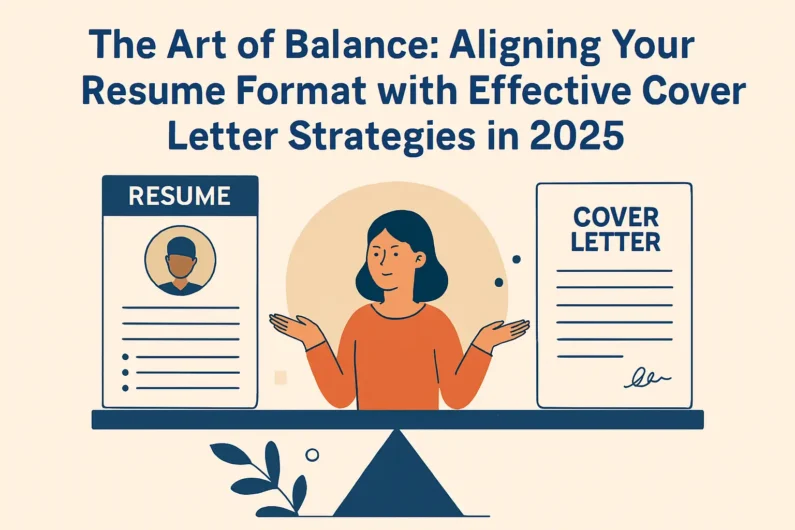
The Art of Balance: Aligning Your Resume Format with Effective Cover Letter Strategies in 2025
Hey there, job seeker! Let’s chat about something that’s been on my mind lately: the dance between your resume and cover letter. Honestly, it’s a bit of an art form to get them in sync, almost like a couple on the dance floor trying not to step on each other’s toes. In 2025, the job market is evolving faster than I can say “AI-generated resume,” and knowing how to balance your resume format with effective cover letter strategies can make all the difference. We all know the stakes are high, right? So, let’s dive in!
Why Your Resume and Cover Letter Should Be Best Buds
Okay, so you might be wondering, “Why should I even care if my resume and cover letter match?” Well, here’s the thing: hiring managers are like detectives looking for clues. They want to see a cohesive story that flows smoothly from your resume to your cover letter. Think of it this way: if your resume is the catchy title of a book, your cover letter is the intriguing blurb that makes people want to read more.
- Consistency: When your resume and cover letter match in tone and design, you look more professional.
- Personalization: Tailoring both documents shows you did your homework. It tells employers you’re genuinely interested in the position.
- Clarity: A well-aligned narrative makes it easier for hiring managers to see how your skills and experiences fit the role.
Honestly, I wish someone had told me this sooner. Back in the day, I whipped up a resume that looked like a neon sign and paired it with a cover letter that was all serious business. Spoiler alert: it didn’t go well.
Choosing the Right Resume Format: Finding Your Groove
Let’s talk resume formats. There’s the chronological format, the functional format, and my personal fave, the combination format. But which one should you pick? Here’s how to make that decision:
- Chronological: This one is great if you have a solid work history and want to show a clear career progression. Think of it as telling a story in the right order.
- Functional: If you’re changing careers or have gaps in your employment, this format focuses on skills rather than job titles. It’s like saying, “Look, I can do this stuff, even if my resume doesn’t show it!”
- Combination: The best of both worlds! This format lets you showcase your skills while still providing your work history. It’s like a buffet where you can pick all the good stuff.
Pro tip: Whatever format you choose, keep it clean and easy to read. No one wants to squint at a cluttered mess, right? For more insights into how to choose the best format, check out Decoding Resume Formats: Which Style Will Get You Noticed in 2025?.
Cover Letter Strategies That Make an Impact
Now that we’ve nailed the resume part, let’s hop over to the cover letter. This is where you get to showcase your personality! Seriously, it’s your chance to shine. So how do you do that?
- Start with a Bang: Don’t just say, “I’m applying for this job.” Open with something that grabs attention. A personal anecdote? A bold statement? Go for it!
- Connect the Dots: Use your cover letter to explain how your experience aligns with the job description. If your resume is the roadmap, your cover letter is the GPS guiding the hiring manager through your journey.
- Be Authentic: Let your voice come through. Write as if you’re talking to a friend (but, you know, with professionalism). If you crack a joke or share a quirky story, it could make you memorable!
For instance, I remember applying for a marketing role once. Instead of a boring intro, I opened with, “I have a passion for storytelling, and I once convinced my friends to start a podcast about cats.” I got the interview, and honestly? It set me apart!
Putting It All Together: The Final Touches
Now that we’ve explored the individual components, let’s discuss how to bring it all together. Here are a few tips for alignment:
- Design Harmony: Use similar fonts and colors in both documents. It may seem trivial, but it creates a visual connection that feels intentional.
- Cross-Reference: If you mention a specific achievement in your cover letter, make sure it’s represented in your resume. This reinforces your narrative.
- Proofread: I can’t stress this enough. Typos in either document? No thanks. Use tools like Grammarly, or better yet, have a friend read through—you’d be amazed at what we miss when we’re too close to our own writing.
Let’s be real, it can feel overwhelming to juggle both documents, but with a little bit of strategy, you can create a killer application that stands out among the rest. Trust me, when I finally got my act together, it was a game-changer.
Wrapping It Up: Your Journey Awaits
So, there you have it! The art of balancing your resume format with effective cover letter strategies isn’t just about ticking boxes. It’s about crafting a narrative that showcases who you are and what you bring to the table in a cohesive manner. Remember, it’s a relationship; your resume and cover letter should support each other, not compete.
As you embark on your job search journey in 2025, keep these tips in mind. Take a deep breath, get creative, and show up as your true self. And don’t forget to check out 2025 Cover Letter Tips: Crafting a Powerful Introduction That Complements Your Resume for more insights. You’ve got this!